
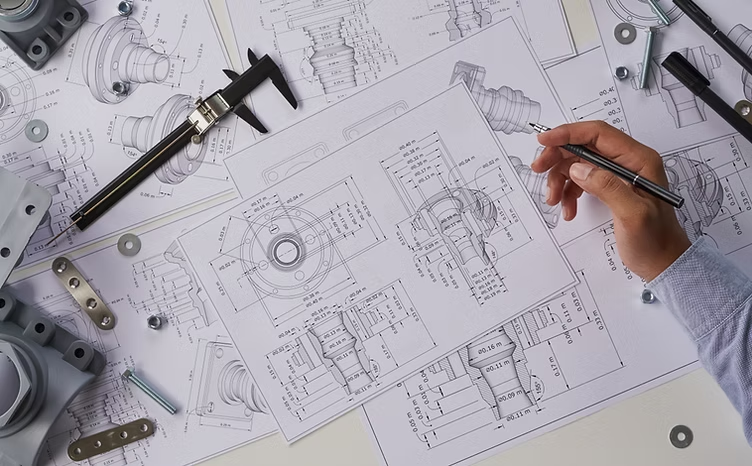
Precision in drafting and design is the backbone of successful engineering projects—accurate technical drawings
not only prevent costly errors but also streamline efficiency, saving both time and resources. Companies like
Greenwald Engineering emphasize this principle, ensuring that every project moves seamlessly from concept to
completion.
1. Foundation of Project Success
• Technical drawings are the blueprint of execution. They guide engineers, manufacturers, and contractors in turning
ideas into reality.
• A single miscalculation or vague detail can lead to structural weaknesses, manufacturing delays, or safety hazards.
• Precision ensures that all stakeholders share a common understanding, reducing miscommunication and rework.
2. Efficiency Through Clarity
• Clear, accurate drawings eliminate ambiguity, allowing teams to work faster and with confidence.
• In industries where deadlines are critical, precision in design translates into shorter project timelines.
• Greenwald Engineering highlights how CAD models and detailed documentation enable smooth transitions from
design to production, minimizing bottlenecks.
3. Cost Savings from Accuracy
• Errors in drafting often result in material waste, redesigns, and additional labor costs.
• Precise design reduces the risk of over-ordering or under-utilizing resources.
• By investing in accuracy upfront, companies avoid expensive corrections later, achieving long-term financial efficiency.
The Role of Drafting & Design in Engineering Projects
Aspect: Impact of Precision
Structural Integrity: Ensures safety and compliance with engineering standards.
Manufacturing: Reduces errors in prototyping and production, saving materials and labor.
Collaboration: Provides a shared reference point for engineers, clients, and contractors.
Innovation: Enables creative solutions by offering reliable frameworks for experimentation.
Cost Control: Prevents budget overruns by minimizing rework and resource misallocation.
Greenwald Engineering’s Approach
• Drafting & Design Services: Delivering accurate CAD models and technical drawings tailored to project needs.
• Mechanical Solutions: Custom designs that integrate precision with functionality.
• Manufacturing Support: Guidance from prototyping to production optimization, ensuring designs translate into
efficient processes.
• Consultancy: Expert insights to navigate technical challenges and improve project outcomes.
Their philosophy—“precision meets innovation”—underscores how accuracy is not just a technical requirement but a
driver of excellence across industries.
Risks of Neglecting Precision
• Safety Hazards: Poorly drafted designs can compromise structural stability.
• Delays: Misinterpretations lead to project slowdowns and missed deadlines.
• Escalating Costs: Revisions and material waste inflate budgets.
• Reputation Damage: Inaccurate work erodes client trust and credibility.
Conclusion
Precision in drafting and design is more than a technical detail—it is a strategic advantage. By ensuring accuracy at the
earliest stages, companies like Greenwald Engineering help clients achieve efficient workflows, cost savings, and reliable
outcomes. In today’s competitive environment, where margins are tight and expectations high, precision is not optional—
it is essential for success.